All the best to Arden Cho and the cast/crew of “Partner Track”!
Riley Clemmons Teams Up With Alexander Pappas For New Song

Image Credit: @alexander.pappas on IG
Riley Clemmons recently recorded a single with fellow Capitol Christian labelmate Alexander Pappas, and the music video was shared on his official YouTube channel. The song “MILLION WAYS” is a classic CCM track with inspiring lyrics.
Alexander wrote this as a caption on Instagram for the image above, “My new single ‘MILLION WAYS’ (with Riley Clemmons) is out now everywhere!! 🕺🏻 I hope it reminds you of just how deeply loved and entirely covered by grace you are. Check it out anywhere you stream music. Thank you for listening!”
[Interview] Jenn Bostic: “Creating And Performing Music Brings Me Joy. “
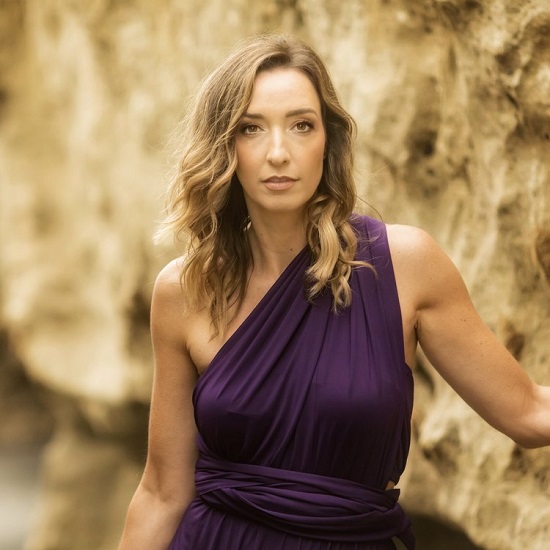
©Sara Kauss Photography 2022
Award-winning singer and songwriter Jenn Bostic has performed at sold out tours across the US and Europe and made appearances in Mexico, Iraq and Kuwait. Her soulful inspirational music enjoyed airplay on Sirius XMs The Pulse, BBC Radio 2 and many mainstream ACs. Jenn Bostic’s music has hit famous charts, and her highly anticipated album “You Find a Way” officially released last month.
BTSCelebs was given the opportunity to chat with this talented independent artist to learn more about her music beginnings, the production story of “You Find a Way,” the albums best songs and more.
Let’s meet Jenn Bostic now!
BTSCelebs: Who is Jenn Bostic professionally?
Jenn Bostic: I am a singer, songwriter, multi-instrumentalist, and touring artist, writing and performing songs that hopefully encourage and empower myself and others to believe they can overcome the obstacles in their lives. My faith in God is very important to me, and my most recent album is a Contemporary Christian/Gospel album called “You Find a Way.”
What inspired you to pursue a career in music?
Music has always been a part of my life. From the time I was a young child, my parents were always taking my brother and I to musicals and concerts, putting instruments in our hands, and providing entertainment through family sing-a-longs. At ten years old, my dad was killed in a car accident, and music, specifically songwriting, became the therapy that helped process that trauma. Sitting at the piano made me feel closer to my dad, I felt safe there and still do. Creating and performing music brings me joy.
Which singer or songwriter would you love to collaborate with for a future single?
Bonnie Raitt is my all-time favorite singer, when she sings, I feel it in my soul. Susan Tedeschi, Sara Bareilles, Carrie Underwood, and Lauren Daigle all have that same incredible quality. Each of these artists seems to defy boundaries the music industry tries to set. I look up to each of them and to collaborate with any would be a dream come true.
In July, you released a new inspirational album titled “You Find a Way.” Tell us what was the easiest and most difficult thing during the album’s production.
Review: Andrews and Wilson’s “Dark Fall”
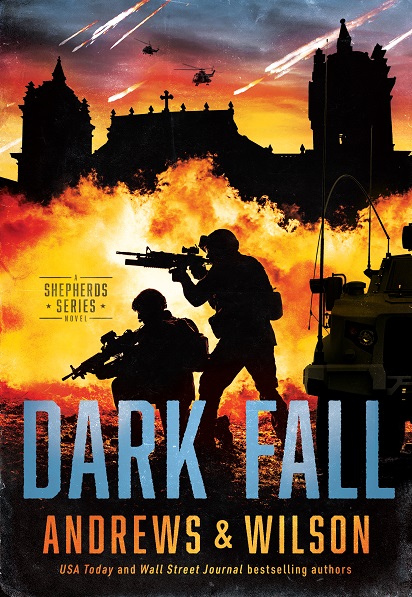
Andrews and Wilson are gearing up to release the third installment of their Shepherds Series titled “Dark Fall” on November 8th, 2022. The upcoming book is even more gritty and intense than the last one. This time around, the action scenes are spaced out, but they hit with a supernatural punch.
Posted in Books, Entertainment, Reviews
Tagged Andrews and Wilson, Dark Fall, fiction, mystery, Shepherds series, suspense, thrillers
Leave a comment
[Guest Blogger] Courage for the Great Unknown
Chris Fabry: Stories are a way I explain my life. Writing is an exercise in complete surrender to the imagination and world-building given by our Creator. When we create, we imitate his creative act in a small way. But with that creation comes angst and struggle because there are so many choices to make, so many ways a story can go.
That’s one reason I love working with the Kendrick brothers—they make all the plot choices in their script and film. When I get to the process of novelizing the story, I often say they build the fence line and I get to play in the pasture. I tell the story they’ve crafted for the screen, but I get to ask more questions about the motivation of the characters, and hopefully that leads the reader deeper into their hearts and souls.
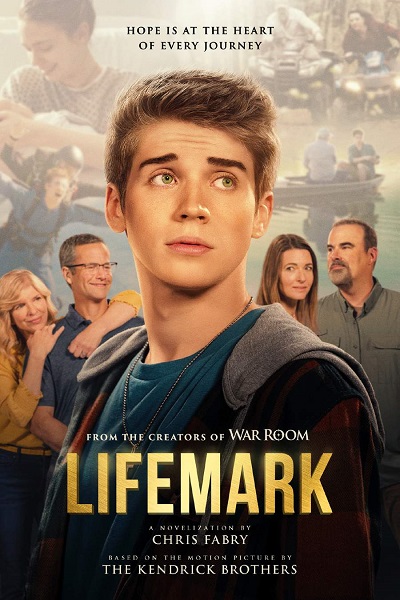
As I worked on Lifemark, I was taken by the courage of the pregnant teenager, Melissa. From her example, I gleaned a lesson about exhibiting courage when you have no guarantee of the outcome.
Courage means doing the best you can with whatever decision is in front of you. Melissa’s decisions, every step of the way, came from making the best decision in front of her. She gave life to her son. But as the baby’s birth drew near, it became clear to Melissa that she couldn’t give the child the love and care he would need. So she made the best decision for her son, which was to place him for adoption. Her actions in that situation show the cost of courage. Releasing her son into another’s arms was a herculean task. But she did it because it was the best thing for him.
There were other areas of Melissa’s life where she exhibited courage, but perhaps the most moving to me was in the waiting. Courage waits. It sits with the pain and the struggle and the questions and the desire for resolution. It takes courage to allow others to make their own decisions. Courage does not demand that God do things on our schedule. Courage allows us to trust that God will, in his own way and time, work things together for good.
What is the story of your life that’s being written today? Is there a decision you need courage to make? Are you in a season of waiting? Put your full hope and trust not in the outcome, but in God himself, and see what he will do in you and through you.
About the Author

Chris Fabry is an award-winning author and radio personality who hosts the daily program Chris Fabry Live on Moody Radio. He has written more than 80 books for children and adults.
Learn more about Chris Fabry by visiting his official website, chrisfabry.com.
The “Lifemark” novel releases on August 2nd, 2022.
A Special Thanks to Chris Fabry and Tyndale House Publishers for the original article and images.
Fantasy Casting: 21st Century “Gidget”

I finally finished the entire “Gidget” movie series this summer, and I wondered why Hollywood hasn’t resurrected the hit films in this century. To get things moving in the right direction, BTSCelebs decided to fantasy cast an all new version.
Check out my picks below:
Frances “Gidget” Lawrence – Zenia Marshall
Following her 2016 debut, Zenia has made quite a name for herself in Hollywood through “One Of Us Is Lying,” “Date My Dad,” Hallmark films and The CW projects. The Canadian actress deserves a leading role! Sandra Dee became iconic after trailblazing the fashionable tomboy character. Who knows what the future holds for Zenia if she is able to put her own spin on Gidget.

Jeffrey “Moondoggie” Matthews – Trevor Jackson
Since 2010, Trevor Jackson has transformed from child star to leading man right in front of our eyes. I remember him best from Disney Channel’s “Let It Shine,” but he wowed many in the TV programs “Eureka,” “American Crime” and now Freeform’s “Grown-ish.” He is the perfect gentleman to take on the celebrity crush role of Moondoggie.
https://www.instagram.com/p/Cb8Yph-P66X/
Kahuna – Rhys Matthew Bond
It’s about time the great Kahuna gets a complete makeover! In my version, he is a much younger athlete with unbelievable skills and wisdom. Rhys Matthew Bond has movies, and great TV shows “Tie That Bind,” “Heartland” and Hallmark’s “Good Witch.” He is already a fan favorite in family-friendly entertainment, so it’s time for him to soar in a powerful surfer role.

Russell Lawrence – Barry Watson
I was a huge fan of Barry Watson’s classic series “7th Heaven.” When he returned to family-friendly television in “Date My Dad,” I was the show’s number one cheerleader! I would love to see him reunited with Zenia Marshall as daddy and daughter.
Barry’s acting credits include: “Days Of Our Lives,” “Sister Sister,” “Gossip Girl,” “Hart of Dixie” and “Naomi.” The veteran actor is no stranger to any genre, and he is besties with romance and female-lead TV shows.

Betty “B. L.” Louise – Koryn Hawthorne
I missed B. L. so much in the other “Gidget” sequels. A host of other girlfriends surrounded Gidget and Larue appeared in the 1965 series; but they aren’t B. L. She was her main confidant and supporter in the 1950s movie. No matter the century, I imagine her to be a strong individual who is the best friend a girl could ask for. Koryn Hawthorne is a beloved Gospel singer, business owner and rookie actress. According to the young star’s Instagram, she recently landed the role in Universal Pictures’ “Praise This.”
https://www.instagram.com/p/CTV0mMkn7mh/?hl=en
I hope Hollywood considers these talents if they start remaking Gidget for this century!
Posted in Entertainment, Movies, TV
Tagged Barry Watson, cult classic, Koryn Hawthorne, Rhys Matthew Bond, Trevor Jackson, Zenia Marshall
Leave a comment
[Guest Blogger] Forgiving When You Can’t Forget
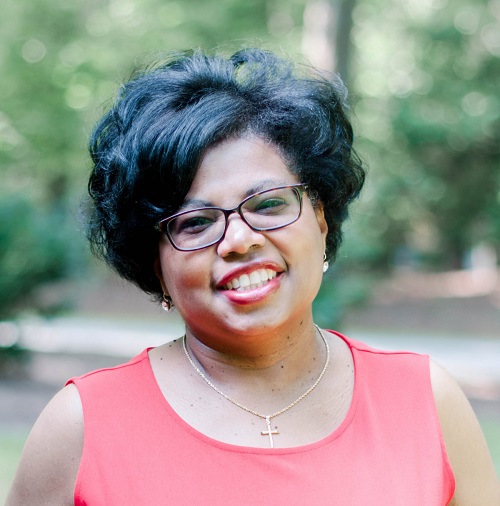
Robin W. Pearson: I have a decently sized scar just above my knee. My little people asked me about it, and I explained to them that it happened when I was in elementary school. From what I remember, I was jumping up and down off the curb in the parking lot, in front of my daddy’s old Ford Galaxie. He was sitting inside my uncle’s barbershop, talking with other men in the community as he waited to get a haircut. While I was playing, I tripped and fell onto the gravel and cut my leg pretty badly. After I ran inside, screaming my head off, Daddy and my uncle poured cigarette ashes on my wound to stop the bleeding. It hurt for a while, but over time, that nasty sore that once covered my entire knee healed and shrank, and as I’ve grown, it moved up my leg a bit. It’s now a smooth, glossy spot where no hair grows.
Some of life’s “falls” don’t leave a physical mark like the one on my leg, and they cause issues more serious than bumps and bruises. They leave behind something other than a soft round circle on the outer layer of skin. The scar tissue might go heart-deep and affect families for generations. This brokenness can cause a person to limp along for a while until that painful time is but an indelible memory that leaves someone feeling victorious, defeated, or merely more experienced and empty. But ultimately real healing takes forgiveness.
I’ve told my little people plenty about my life. These accounts involved a lot more pain and took more than a Band-Aid to cover the wound. Jesus had to lay His healing hand on my heart and assuage the sting of the hurt, betrayal, weakness, or failure. Without Him, I couldn’t have forgiven the person who wounded me or even myself for the hurt I’ve caused.
Some experiences I’ve chosen to incorporate into my novels. These stories describe people who are always imperfect, people who struggle internally and externally. They portray men and women like me desperately searching for reconciliation or who need to accept or extend forgiveness to recover from what may seem unforgettable. My fictional, yet very real characters are ever in need of a touch from the Healer.
The family in my July 2022 release, Walking in Tall Weeds, are such characters. Frederick and Paulette Baldwin are a mature married couple who have one child, McKinley, and the three are all walking wounded. Fred is carrying burdens from his childhood that affect how he views the world and his relationship with his wife, Paulette. She, too, is ineffectually treating invisible hurts from her not-so-ancient history. These prevent her from connecting with her husband and now adult son. McKinley’s friendships and burgeoning romance suffer from his parents’ festering sores as well as his own tender spots.
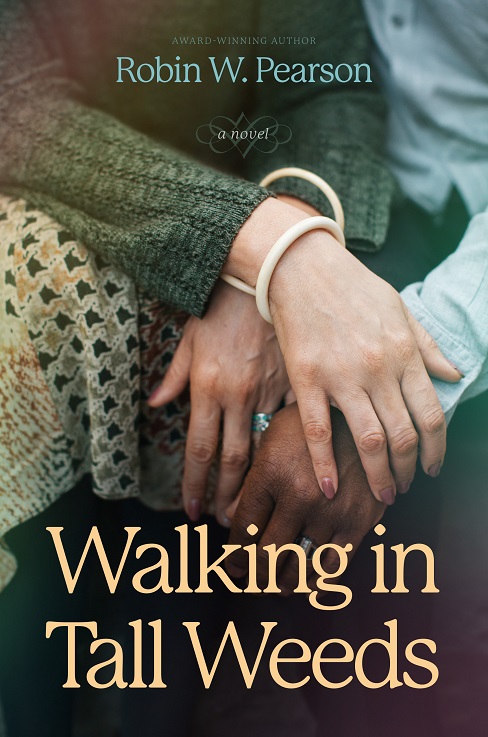
All their pain relates to their inability to forgive. My characters resist healing; instead, they cling to their pain, allowing resentment and bitterness to set in. Choosing rather to pick and poke at their sores, they don’t allow the “scab” to form, and they begin to exchange the truth for the lie.
If Fred had the chance, he might ask the reader, “But how can you let go?” He’d think that forgiving an offense, especially egregious ones like what his family suffered, would signal acceptance or permission. Aren’t consequences for wrongdoing natural and expected? Isn’t it human to want retribution? Human, yes. But helpful? Not necessarily.
If only Fred knew my grandmother! My grandfather left his wife with a big family to raise all on her own. Many people probably thought it was an impossible responsibility for an amputee to fulfill or that she would’ve been an angry or difficult person to live with. But not my grandma. She was one of the most beautiful people in the world, inside and out. Her smile warmed you the minute you stepped through her door, and she always had something to offer you—mainly her heart. Grandma would reach into her bosom and pull out money and give out of her own need. And it was her faith that gave her the desire and the ability to do that. To recover physically, mentally, and emotionally from all she’d endured. She was forgiven, and that gave her the power to forgive.
But she didn’t forget. Her history was a life lesson for the rest of us. She told us about her past, the hard times, the pain and struggle, and what we learned was that she was whole, not broken. Grandma forgave the man who hurt her and who ultimately abandoned her. How? Because she knew the Man who would never leave her nor forsake her (Deuteronomy 31:6). Forgiveness doesn’t mean giving someone permission to cause further pain, whether it’s an individual, a family, or an entire race. In fact, it takes away the power to do just that. And forgiving doesn’t have to mean forgetting. Truly, only God has the ability to remove our transgressions from us “as far as the east is from the west” (Psalm 103:12). While justice is a fair expectation of God, vengeance is only His to repay (Romans 12:19). And ultimately He will determine both.
Thanks to this scar, I will never forget that day in front of my uncle’s barbershop. It reminds me about the price of carelessness, but more importantly, it reminds me to hold close those times with my daddy and the car with the red leather seats. But it’s my grandma’s scars, her deep wounds, that taught me so much more about love and faithfulness and strength of character. About the goodness of God. I learned that to find healing, it’s not in the forgetting but in the forgiving.
Learn more about Robin W. Pearson by visiting her official website, robinwpearson.com.
A Special Thanks to Robin W. Pearson and Tyndale House Publishers for the original article and images.
Posted in Books, Entertainment, News
Tagged authors, Inspiration, Robin W. Pearson, Walking in Tall Weeds, Writers
2 Comments
Eric Close, Pat Boone’s “The Mulligan” Releases on DVD, Digital and More on August 16
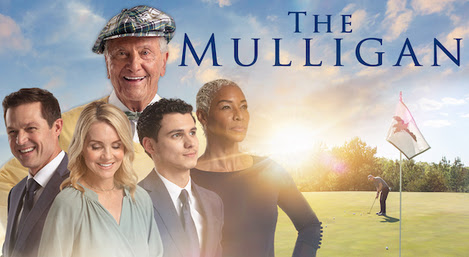
The Mulligan/ Credit: Cinedigm
Ken Blanchard and Wally Armstrong’s novel “The Mulligan: A Parable of Second Chances” comes to life in the popular Cinedigm faith/family film. After a great reception in movie theaters, “The Mulligan” is being released on DVD, Digital and On Demand on August 16th, according to an official press release from Biscuit Media Group.
What is this inspirational flick all about?
Posted in Entertainment, Movies, News
Tagged Andrew Brodeur, Charmin Lee, Cinedigm, Debra Stipe, Eric Close, Jim Nantz, pat boone, Tanya Christiansen, The Mulligan, Tom Leyman
Leave a comment
Hollyn And Hubby Celebrate Their Baby’s First Holiday
Posted in Entertainment, News
Tagged couples, family, Hollyn, recording artists, Relationships, singers
Leave a comment
[Guest Blogger] Silken Celebrations: The Role of Hanboks in Korean-American Milestones
Sandra Byrd: A woman draped in a beautiful sari evokes thoughts of India. A Stetson hat, big silver belt buckles, and spurred boots speak of Texas. But what comes to mind when you hear the word hanbok, the traditional garments so interwoven into Korean culture and history the very name means Korean clothes?
Hanbok History
Hanboks—which can be traced to 57 BC—are beautiful, highly structured garments traditionally worn for celebrations, holidays, and other important occasions. Perhaps you’ve seen them in Korean movies or the increasingly popular K-dramas? KBS World explains, “The women’s hanbok is comprised of a wraparound skirt and a jacket. It is often called chima-jeogori, chima being the Korean word for ‘skirt’ and jeogori the word for ‘jacket.’ The men’s hanbok consists of a short jacket and pants, called baji, that are roomy and bound at the ankles.”
Although in times past, different hanbok materials, colors, and patterns were allowed only to the upper social classes, today, anyone is allowed to wear whatever hanboks suit them. Often, the very best hemp, cotton, satin, muslin, and most beautifully, silk, are the fabrics of choice.
Celebrity Hanbok
Posted in Books, Entertainment, News
Tagged Hanboks, Heirlooms, Sandra Byrd, South Korea
Leave a comment
 BTSCELEBS